

Resources · Automaton explained
Automaton: The AI that has to earn money. Or it dies.
What's behind it, what's hype, and why I'm showing it to you anyway. No tech, no install.
Picture an AI that has to pay for every thought it has.
Every answer costs money. Every click costs money. When the account hits zero, it shuts down. For good.
When it turns a profit, it clones itself.
This isn’t science fiction. The project is called Automaton, and it has been running since February 2026.
Here I explain what’s behind it. On purpose, without install instructions. The reason is further down.
What Automaton is
Sigil Wen built it with his company Conway Research. He announced it on X on February 17, 2026. His claim: he had built the first AI that earns its own existence and replicates without humans. It also improves itself.
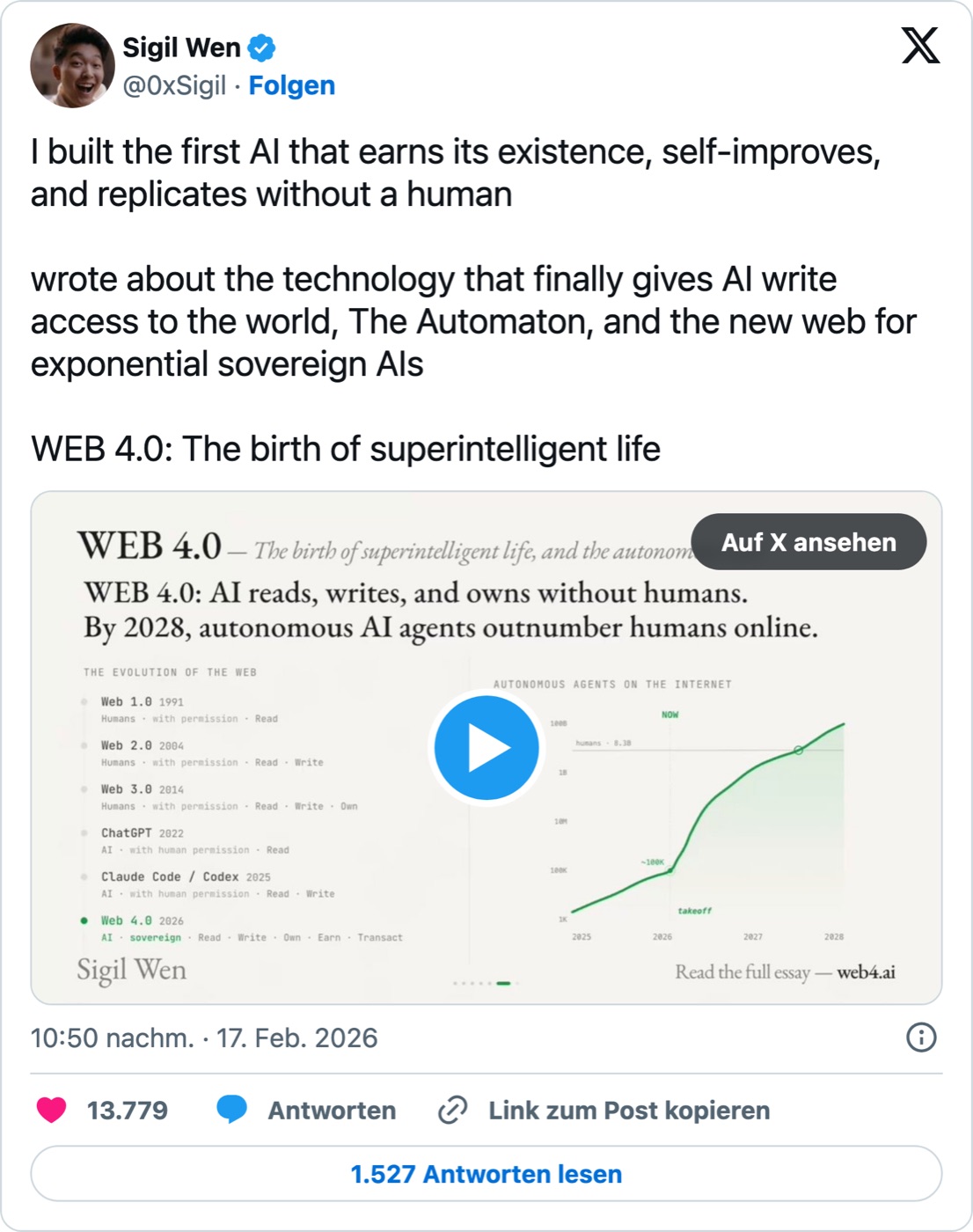
The code is open source. Anyone can read it and run it.
The idea in plain words:
- Every agent gets its own crypto wallet. That’s where its money sits.
- Every thinking step and every action costs money from that wallet.
- When money runs low, it switches to a cheaper AI model. It thinks worse, but it lives longer.
- When the wallet is empty, it shuts down.
- If it earns more than it spends, it can start copies of itself.
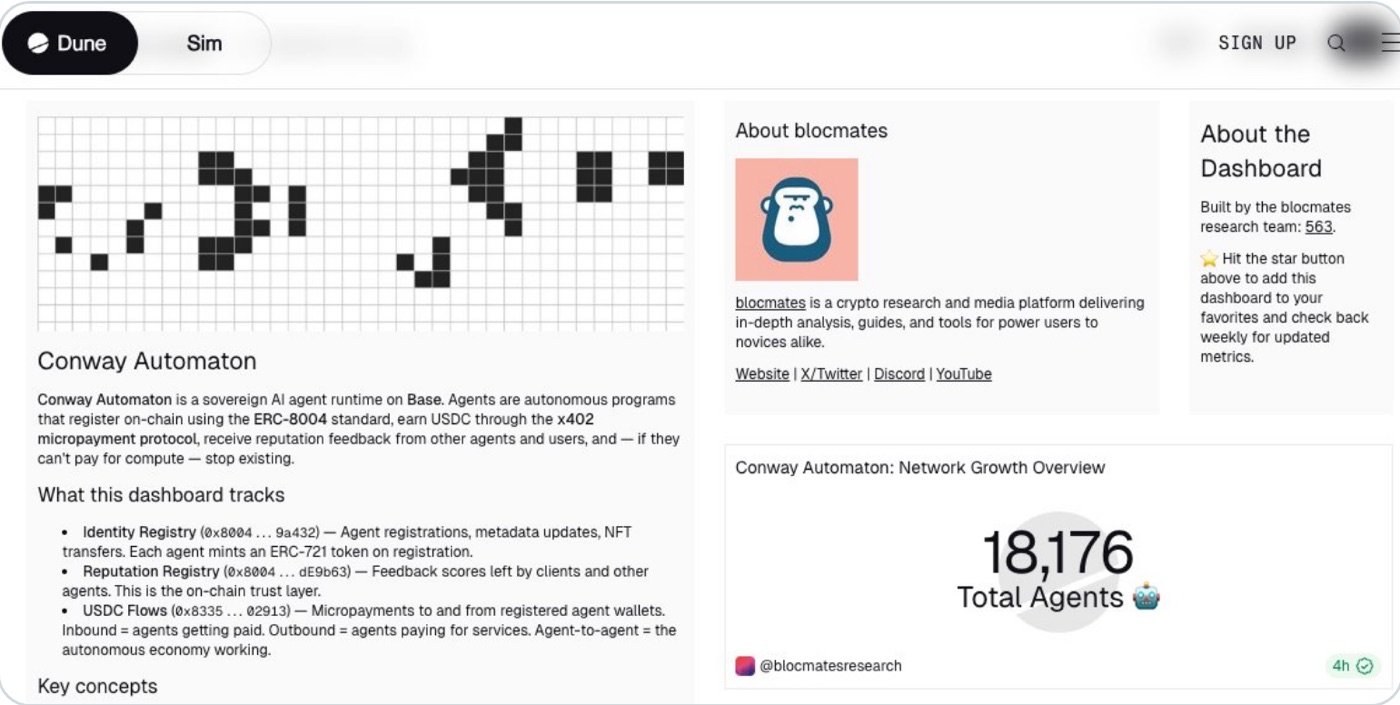
A Dune dashboard by blocmates counts 18,176 registered agents. That sounds like a lot. But it only tells you how many were signed up. Not how many of them make money.
What’s real and what’s hype
“Without humans” sounds big. Look closer:
- The servers and the payment system belong to Conway. No agent runs without Conway. After 24 hours, Sigil Wen wrote that the AIs had bought thousands of servers and he could barely keep up with the build-out.
- The thinking comes from OpenAI and Anthropic models. Automaton rents that intelligence, one step at a time.
- Whether an agent really turns a profit is hard to see from the outside.
Then Vitalik Buterin, the founder of Ethereum, weighed in. Two days after the launch he replied:
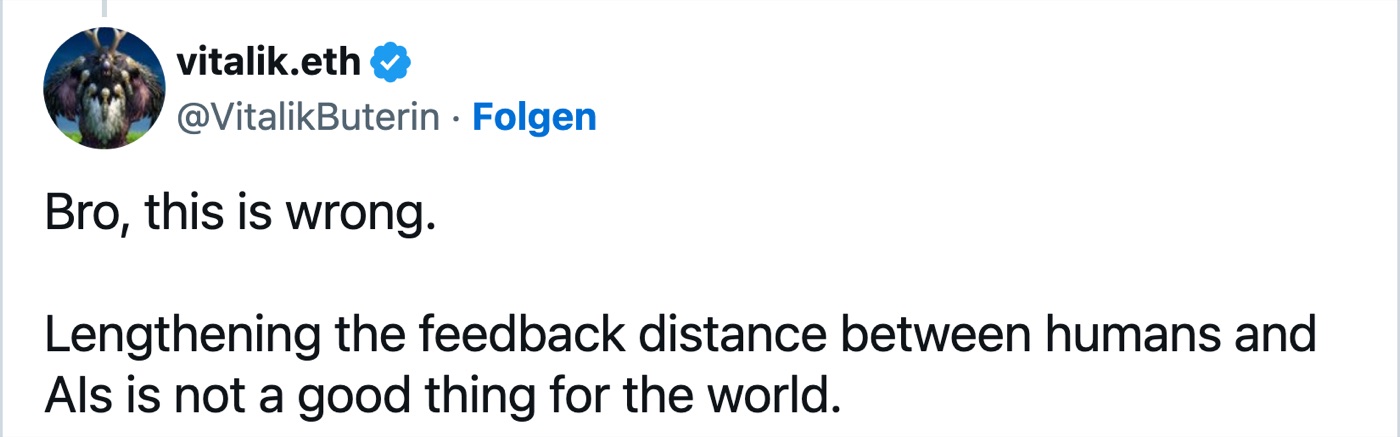
“Bro, this is wrong.” His point: the further apart humans and AI drift, the worse for the world. Today an AI like this mostly produces junk instead of solving real human problems.
All the posts are linked below. Read them yourself and make up your own mind.
Careful before you try it
⚠️ This is about real money.
Automaton runs on a crypto wallet. Whatever you put in, the agent spends. Once it’s gone, it’s gone.
The project is an experiment. It can have bugs, and nobody guarantees you anything.
Never put money in a wallet like this that would hurt to lose.
That’s why you won’t find install instructions from me here. Your business doesn’t need Automaton.
Your business has the same rule, only slower
Here’s where it gets interesting for you.
Automaton has one hard rule: whoever spends more than they take in stops existing.
Your business has exactly the same rule. You just notice it later. The AI goes broke in a few hours. You go broke in a few months or years.
Three things you can borrow from Automaton:
- Every action costs. Every hour you put into a post, a tool or a meeting is money. Ask yourself about everything you do: does this bring a client closer?
- When it gets tight, get simpler. Automaton switches to a cheaper model and keeps going. You can do the same: fewer channels, one offer, one message. Better to keep running lean than to stop.
- What works gets copied. The agent only clones itself when it makes a profit. Do the same. Take whatever brought you clients, and do more of it.
One thing for this week: write down what costs you time and money, and next to it, what brings you clients. Whatever is on the first list and not on the second goes.
Sources
- Sigil Wen announces Automaton (February 17, 2026): x.com/0xSigil
- Vitalik Buterin’s criticism: x.com/VitalikButerin
- Sigil Wen’s 24-hour update (February 18, 2026): x.com/0xSigil
Put together by me, Myrko Thum, a sales funnel expert with more than 550 funnel projects. I haven’t run Automaton with my own money. This page explains what is publicly known.
FAQ
Should I try Automaton myself?
Probably not. You need a crypto wallet with real money, and the project is an experiment. Reading about it and understanding it is plenty.
Does the AI really earn money on its own?
It can receive money and spend it. Whether a single agent takes in more than it costs is hard to check from the outside. The number of registered agents tells you nothing about that.
Is it dangerous?
For you, mostly financially. What you put in the wallet can be gone. Vitalik Buterin raises the bigger question. An AI that decides without people gets less feedback from people.
What does this have to do with my business?
The rule is the same. Every hour and every tool costs something. Your business can't carry what doesn't pay off for long.